CRISPR‑Cas9 gene editing has moved from scientific breakthrough to clinical possibility with extraordinary speed. Once confined to molecular biology labs, CRISPR is now shaping real‑world conversations in hematology, oncology, neurology, infectious disease, and rare genetic disorders. Its rise is occurring alongside broader advances in medical technology that are redefining how physicians diagnose, treat, and manage complex conditions. Its promise is profound: the ability to correct pathogenic mutations at their source, enhance immune cell therapies, and potentially cure diseases long considered irreversible.
But scientific progress alone does not guarantee clinical readiness. As CRISPR moves closer to real‑world deployment, physicians must understand not only how the technology works, but how it will reshape clinical workflows, ethical responsibilities, and patient expectations.
Physician familiarity and readiness for CRISPR
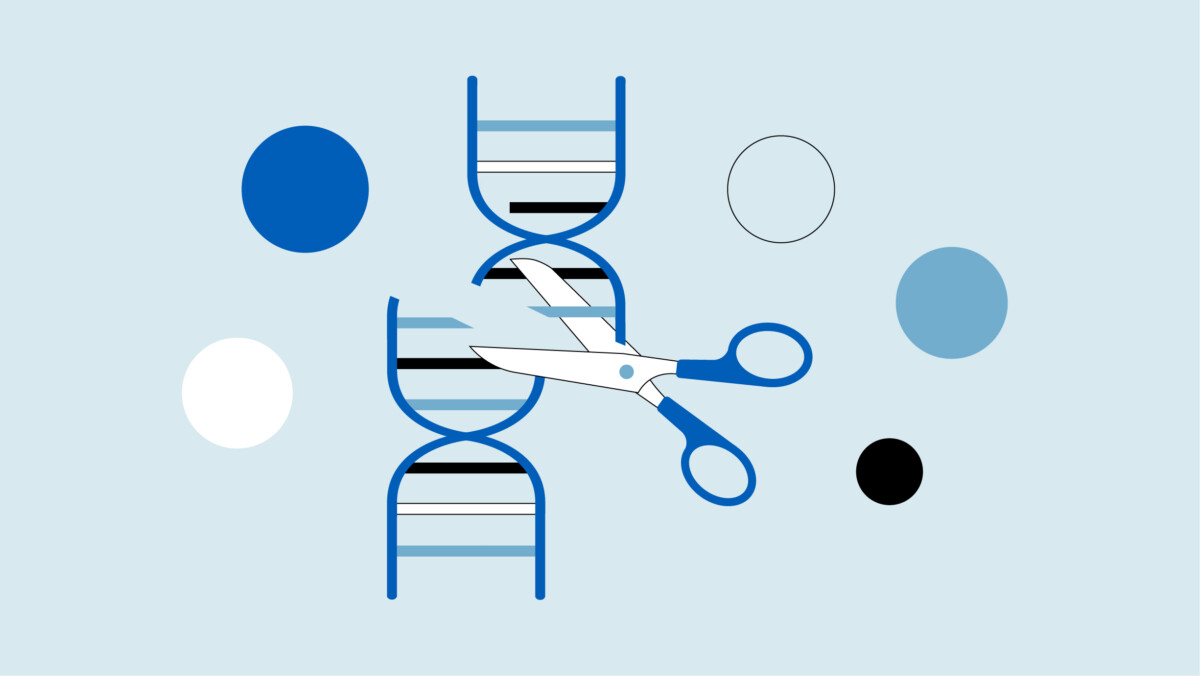
At its core, CRISPR‑Cas9 is a programmable gene‑editing system adapted from a bacterial immune mechanism. A guide RNA directs the Cas9 nuclease to a specific DNA sequence, where it creates a targeted double‑strand break. The cell’s natural repair pathways then introduce changes either by disabling a gene or by inserting a corrected sequence. This mechanism, described in foundational CRISPR literature such as CRISPRpedia, underpins nearly every therapeutic application now entering clinical trials.
Before CRISPR can be integrated into everyday practice, it is essential to understand how prepared physicians feel today. A recent Sermo poll reveals a striking distribution: only 12% of physicians say they are very familiar with CRISPR and actively follow its medical use, while 37% report knowing the basics but only being somewhat familiar. Another 27% have heard of CRISPR but do not understand the clinical details, and nearly one-quarter are not familiar with it at all.
This means that 51% of surveyed physicians lack the foundational knowledge needed to evaluate CRISPR’s clinical readiness, even as the technology accelerates toward adoption.
Published research mirrors these findings. Studies assessing clinician knowledge show that while most physicians recognize CRISPR’s potential, far fewer understand its mechanisms, the difference between in vivo and ex vivo editing, or how to interpret early‑phase trial data. Many clinicians express uncertainty about how CRISPR is being used in clinical trials, how the FDA regulates gene‑editing products, and what training will be required to administer or manage these therapies.
Sermo community insights echo this tension. A GP on Sermo summarized the challenge succinctly, “We’re only partially prepared. The science is advancing faster than clinical frameworks, so education, ethics, and regulation need to catch up before CRISPR becomes routine in medicine.”
Physicians in the comments consistently request structured education, particularly CME, case‑based learning, and clear clinical guidelines, to bridge the gap between scientific promise and clinical practice. As CRISPR moves from research to real‑world medicine, peer‑driven platforms like Sermo will play a critical role in helping clinicians compare trial data, discuss safety signals, and build collective readiness.
Clinical applications of CRISPR gene editing
As physician familiarity evolves, CRISPR’s clinical applications are expanding rapidly. The Sermo poll shows where clinicians expect the earliest impact: 31% believe oncology will lead, followed by 27% who point to rare genetic disorders, 17% who expect hematology to see early benefit, and 8% who highlight infectious diseases or reproductive interventions. Another 16% remain unsure, reflecting both excitement and uncertainty.
These expectations align closely with the current therapeutic pipeline.
One physician emphasized the need for interdisciplinary collaboration: “I am a clinical geneticist that does translational gene therapy research. Clinical geneticists needs to be integrated much more deeply into all areas of medicine to help practitioners with this. These therapies and the basic science that underpins them is far too complex to expect a busy clinician to acquire the knowledge necessary to manage these patients and have conversations about the therapies.”
Physicians across specialties share similar enthusiasm. One U.S. based radiologist noted CRISPR’s dual promise in oncology and genetic disease. A rheumatologist highlighted the potential for genetically informed treatment selection. A GP described neurology’s sense of anticipation: “Itʼs fascinating to see how CRISPR-based gene therapy will reshape neurology. For the first time, we can imagine correcting genetic defects directly within nerve cells—something that once felt like science fiction. Serious disorders, such as Huntingtonʼs disease or certain hereditary forms of amyloidosis, are now facing new possibilities. Thereʼs still a long way to go, but it truly feels like weʼre standing at the beginning of a new era in neurological medicine.”
Together, these perspectives reflect the broader shift toward precision medicine that is reshaping how clinicians diagnose, stratify, and treat complex conditions.
CRISPR’s most advanced applications fall into two categories: correcting monogenic disorders and enhancing cell‑based therapies. Its rise is also occurring alongside rapid advances in next-generation diagnostic technology, which are reshaping how clinicians detect, characterize, and manage genetic disease.
Correcting monogenic disorders
- Hematologic Conditions: The first regulatory approvals: CRISPR‑edited hematopoietic stem cells have produced durable, transfusion‑independent outcomes in sickle cell disease and beta‑thalassemia, aligning with the 17% of physicians on Sermo who expect hematology to lead early adoption.
- Sickle Cell Disease (SCD) and Beta‑Thalassemia: Ex vivo editing to upregulate fetal hemoglobin or correct HBB mutations is now one of CRISPR’s most mature clinical applications.
- Hereditary Transthyretin Amyloidosis (hATTR): In vivo CRISPR delivery has demonstrated significant reductions in circulating transthyretin.
- Duchenne Muscular Dystrophy (DMD): CRISPR‑mediated exon skipping and gene correction strategies are advancing through early‑phase trials.
- Cystic Fibrosis (CF): CRISPR is being explored to correct CFTR mutations, though airway delivery remains challenging.
- Inherited Retinal Degenerative Diseases: Localized ocular delivery makes retinal disorders an attractive early target.
Enhancing cell and cancer therapies
- Immuno‑Oncology (CAR‑T and TCR Therapies): CRISPR is being used to enhance CAR‑T persistence, reduce exhaustion, and create allogeneic “off‑the‑shelf” products reflecting the 31% of surveyed physicians who expect oncology to see the earliest impact, including real-world insights into what happens when CAR-T therapy doesn’t work. These innovations sit alongside a rapidly expanding body of non-CRISPR cancer research that is also reshaping how clinicians approach targeted tumor editing and immune‑based therapies, such as the Galleri cancer blood test and AI-driven breast cancer detection.
- Infectious Disease Treatment: CRISPR‑based antivirals are being explored for HIV and hepatitis B
- Reproductive or Prenatal Interventions: While not clinically deployed, CRISPR’s potential for germline or prenatal editing remains a major ethical and scientific discussion point.
- Treating Rare Genetic Disorders: CRISPR is being tested in dozens of rare monogenic conditions, offering the first realistic curative pathway for many patients—mirroring the 27% of physicians on Sermo who expect rare disease to see early impact.
Professional and ethical concerns of CRISPR treatment
As CRISPR moves closer to clinical practice, physicians are voicing clear concerns about safety, ethics, and equitable access. The Sermo poll reveals the distribution of these worries: 26% of surveyed doctors identify long‑term safety and unknown effects as their biggest concern, 20% point to off‑target mutations, 23% cite ethical implications, 20% highlight cost and access, and 9% emphasize regulatory oversight.
1. Long‑term safety and unknown effects
Because CRISPR edits are permanent, clinicians worry about delayed adverse effects, immune responses, and unanticipated biological consequences.
2. Off‑target mutations
Even low‑frequency off‑target edits could disrupt tumor suppressor genes or introduce oncogenic mutations.
3. Ethical implications
Concerns include germline editing, consent for future generations, and potential non‑therapeutic enhancement.
4. Regulatory oversight
Physicians want clearer FDA pathways, monitoring requirements, and adverse‑event reporting structures.
5. Cost and access
CRISPR therapies may be prohibitively expensive, raising concerns about equity and the risk of a “genomic divide.”
A GP on Sermo captured the duality of promise and concern, “I think it’s a very interesting therapy, especially for untreatable congenital diseases or certain types of cancer. However, I think it will pose an ethical dilemma, and not everyone will have access to it due to its high cost.”
Managing CRISPR in your future practice
With these concerns in mind, physicians are asking when CRISPR will realistically enter everyday practice. A Sermo poll shows wide variation as 13% of respondents expect integration within 1–2 years, 37% within 3–5 years, 31% within 5–10 years, 10% believe it is more than a decade away, and 7% do not believe it will ever become routine care.
A U.S. family medicine physician noted: “For now, the use of CRISPR would go through labs which focus on CRISPR and large academic institutions.”
An OBGYN added: “This still feels like a long time in the future for general medical care.”
And another GP emphasized both distance and potential: “I think this is still decades away from reaching clinical practice, but has a potential to be a paradigm shift in how we manage conditions, including ones previously thought to be untreatable.”
Early adoption will be specialty‑driven, concentrated in academic centers, and dependent on training, reimbursement, and long‑term safety data.
How CRISPR gene editing tech will impact physicians
CRISPR is poised to reshape clinical practice, and physicians are already signaling what they need to feel prepared. In the recent Sermo poll, nearly half requested CME or structured education, while others emphasized case studies, communication tools, ethical frameworks, and access to genetic specialists. The message is clear: clinicians want practical guidance, not hype.
CRISPR also shifts medicine from chronic management to potential cure. That transition requires new workflows, long‑term monitoring strategies, and a different approach to coordinating care across specialties.
With curative potential comes greater ethical responsibility. Physicians will increasingly serve as gatekeepers who balance scientific promise with realistic expectations, helping patients navigate uncertainty without inflating hope.
Care delivery will become more interdisciplinary. CRISPR cases will draw together geneticists, hematologists, oncologists, pharmacists, and bioethicists, with many teams relying on collaborative models to manage complex decisions.
And because the science is evolving rapidly, continuous education will be essential. Every specialty touched by gene editing will need ongoing updates to stay aligned with emerging data, safety considerations, and clinical standards.
Join the dialogue that will define CRISPR in medicine
CRISPR‑Cas9 represents one of the most significant medical breakthroughs of the 21st century. Its transition from laboratory innovation to clinical reality is already underway, with early approvals in hematology and dozens of trials across oncology, rare diseases, and infectious conditions. For physicians, CRISPR marks a paradigm shift from managing chronic genetic disorders to potentially curing them.
But successful integration requires more than scientific progress. It demands ethical leadership, regulatory clarity, long‑term safety data, specialized education, and equitable access strategies. These needs echo the broader ethical considerations that clinicians already navigate when balancing innovation with responsible, patient‑centered decision‑making. Most importantly, it requires collaborative dialogue between researchers, regulators, and practicing clinicians.
Sermo is uniquely positioned to support this transition. As CRISPR therapies move toward broader adoption, physicians need a trusted space to compare trial data, debate ethical boundaries, share real‑world experiences, and collectively assess readiness.Join the conversation on Sermo. Engage with peers who are already navigating CRISPR’s clinical implications. Share your questions, your concerns, and your insights. Together, the medical community can build the knowledge base needed to ensure CRISPR’s promise is realized safely, ethically, and equitably.